

BLOG

Ten Top Tips for Tayrona
Vital tips to improve your visit to one of Colombia's most famous destinations

- Go early to avoid queues and have the best pick of accommodation
- Take plenty of water and suncream
- Bring your own food to avoid high prices and potential food poisoning
- If you’re going to take alcohol beware, it’s likely to get confiscated at the entrance
- Be aware of where you can and can’t swim. Plenty of people have drowned in the park as currents are strong
- Bring snorkelling gear
- Consider going as a day trip, using El Rio as a base
- Visit the lesser known but equally beautiful Playa Brava and Bahia Concha
- Leave your big backs and travel light - we can look after your luggage at El Rio
- Bring plenty of cash and withdraw in Santa Marta - cash machines are few and far between. Some restaurants or shops will allow you to withdraw but for a hefty fee
For more information, check out our guide here

We Need To Talk About Despacito
Why we should be scared about Despacito
Before we go on, I feel the need to mention that from the very beginning, I have both detested and loathed Despacito in equal measure. I have even gone to the extents of writing “no voy a tocar Despacito” (I’m not going to play Despacito) in permanent marker on my laptop. So just to clarify, I’m not going to say anything particularly complimentary about Des-pa-cito.
The song first came to my attention at the beginning of the year, when a particularly drunk group of girls came and asked me to play it. Apparently it was one of the girls’ favourite tracks. I explained to them we didn’t play reggaeton, that we didn’t have wifi, and that, most importantly, I didn’t have the song. This didn’t matter. I needed to play Des-pa-cito. The most important thing that was going to happen that night was that I played Des-pa-cito. I hot-spotted my laptop with my phone, I found Des-pa-cito, I downloaded Des-pa-cito, I played Des-pa-cito. I then promptly deleted Des-pa-cito and prayed that I would never hear Des-pa-cito again. This turned out to be extremely wishful thinking. From then on not a day has gone by where I haven’t heard either the original or some horrific salsa-ified remix played in shopping centres, taxis, supermarkets, electrical shops, hardware shops, the list is endless.
I went back to the UK in June, the principal thing that I was obviously looking forward to (aside from excessive sausage roll consumption and being able to put loo roll down the loo) was not having to hear Des-pa-cito played ad infinitum in every public space I set foot it. Oh how wrong I was. Apparently the fact that the song is both extremely terrible and also in Spanish hadn’t mattered. Des-pa-cito had apparently become universally popular. Justin horrid Beiber had even got his grubby little mitts onto Des-pa-cito and had done a bit of singing on it. Short of doing a Van Gough, it transpired I was going to have to endure Des-pa-cito on home soil as well.
Des-pa-cito was the first foreign language song to reach #1 in the United Kingdon after “Gangnam Style”. Do you remember “Gangnam Style?” Do you remember how bad “Gangnam Style” was? Des-pa-cito is officially as bad as “Gangnam Style”, except with one key difference: “Gangnam Style” was always meant to be a joke, tongue in cheek, a humorous dig a South Korean society that went viral and got way out of hand. Des-pa-cito is a legitimate pop song that is just really, inexplicably bloody popular. Be terrified.
I have no idea who sings Des-pa-cito, I doubt many people do. Des-pa-cito has become a single omnipresent entity - a single omnipresent entity that has been streamed 4.6 billion times. That’s more than any other song ever. This is extremely worrying to people like me that both loathe and detest Des-pa-cito in equal measure because songs that popular don’t die. Songs as popular as Des-pa-cito live on at cheesy student nightclubs, at weddings, on awful Latin American radio stations forever more, eclipsing the artists that created it, eclipsing the entire genre it spawned from, eclipsing the sun and bringing eternal Des-pa-cito sounding darkness on every thing and every one, until we find ourselves driving to the supermarket in 5 years time shouting “suave suave-cito” at the top of our lungs because it’s somehow made it onto our playlist of guilty pleasures, right between “Don’t Stop Believing” and “La Macarena”. Do you remember the last time you heard these songs? Perhaps not, but you know it was recently, because these terrible tunes are what form the musical wallpaper of our existence. Tracks like Des-pa-cito dissolve into the background but remain in your head eternally. Did you hear Des-pa-cito at the garage? Did you hear Des-pa-cito whilst you were on the bus the other day, playing off some awful teenager’s phone? You have no idea, but one thing we do know is that we are going to keep hearing Des-pa-cito forever.
There is one final horrifying point to be made about Des-pa-cito which is this: most songs this popular are in English and generally speaking don’t tend to have much longevity in Latin American countries; they disappear. We will never shake it off. This is real, this is happening. Apparently in this dystopian nightmare that is 2017, a bad reggaeton / pop crossover track is now the most popular song in the world and there’s not a thing we can do about it.

Musica Electronica on Colombia's Caribbean Coast
The best parties and festivals in the north of Colombia
Here at El Rio Hostel, we are all about decent beats, which can be a bit tough when the sound of the accordion rings from the stereo of every taxi, bus and discoteca between Cartagena and Riohacha. Don’t get me wrong, we’ve got nothing against the local music, but sometimes we need a dose of something more pumping to make our feet move on a night out. Here are the 4 best places to find electronic sounds on the Colombian Caribbean…
1. El Rio
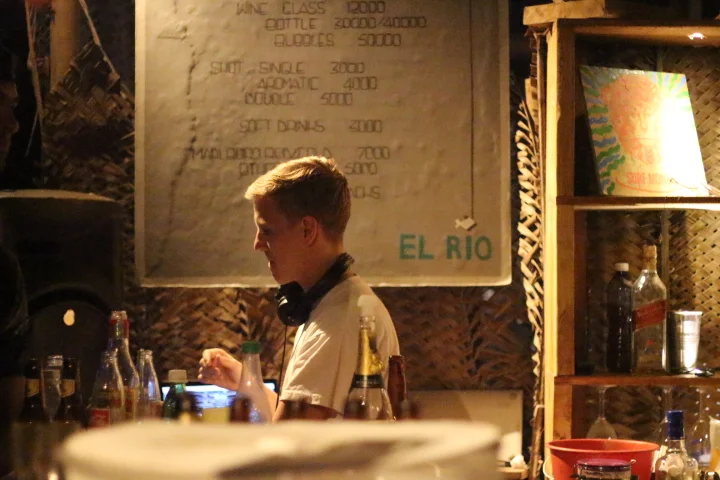
We pride ourselves at El Rio as being the best location to hear colourful house, techno and disco, on a weekly basis, all set in everyone’s favourite river side bar. Keep your eyes on our social calendar for our bigger nights, where we play through until sunrise
2. Armando Records Cartagena
The newly opened arm of the Bogotá favourite plays hosts to the likes of Soul Clap Record’s Nick Monaco, plus a variety of bands and DJs
3. Casa Grande Full Moon
A monthly party on a stunning white sandy beach that sees guests and residents spin house, drum ’n’ bass, techno and everything in between

4. Electronic Arts Festival Barranquilla
The largest event of it’s type on the coast. Organised by a national and international team, the DJs are always top notch and the production very well thought through. The festival takes place annually in Barranquilla


Friendship Whilst Travelling
Prior to a trip, a lot of thought can go into who would make a good travelling companion.
Prior to a trip, a lot of thought can go into who would make a good travelling companion. I’ve known best friends opt out of travelling together for fear that they wouldn’t gel whilst on the road. This fact makes it all the more interesting when considering the faith in their compatibility people put in strangers whilst on the road. Often people will meet in the bar of a hostel, perhaps spending one or two days together, discuss travel plans and realise they’re heading in the same direction. “Should we get the bus together?” And so it begins.
Friendships are formed quickly and often very intensely whilst travelling. Complete strangers go to being best friends in the space of days. All of a sudden you are spending every waking moment in the company of someone that just a few days ago was unknown to you. If you think about it, when was the last time you spent weeks, perhaps months, spending nearly all of your time in the company of one of your friends back home? You eat every meal together, take buses together, share rooms, see bizarre sights, ride elephants together, have profound and life changing experiences together. When was the last time you did that with a friend back home? In fact, some of my most frequently recounted memories have involved the company of “Nathan and Doobs, these two Aussie blokes we met in Puerto Escondido”, or something similar. This can bring you very close to someone very quickly, which is brilliant.
And what if it’s more than friendship? Coupling up whilst travelling happens frequently, especially amongst solo travellers. However getting to know someone whilst travelling is very different to your usual dating game. Whilst back in your home town, you might go on a date or two a week, getting to know people slowly. You want to look your best, come across well and dates tend to last the evening or a weekend. This is a stark contrast to how this works whilst on the road, which is much more honest and full on. The makeup goes out of the window, your imperfections and stresses are laid bare far faster than they would be normally. You’re not just meeting for brunch; you’re having breakfast, lunch and dinner with your new partner.
This is made all the more bizarre by the fact that when you say goodbye to these people who have touched your life so deeply whilst on the road, you then have to deal with them suddenly leaving and saying goodbye. Often plans are made to visit each other and meet again, but this rarely happens. The odd Facebook message may be exchanged down the line, but that can often be the end of it.
So you make the most of your shared experiences and then promptly move on to your new new best friend, and temporarily forget all about that funny German bloke you travelled through Bolivia with. But when you get home and go through your photos and are in tears laughing at some inside joke that no-one will ever possibly understand, you know that even if you never see that person again, you’ve got a friend for life. That’s something to hold on to.